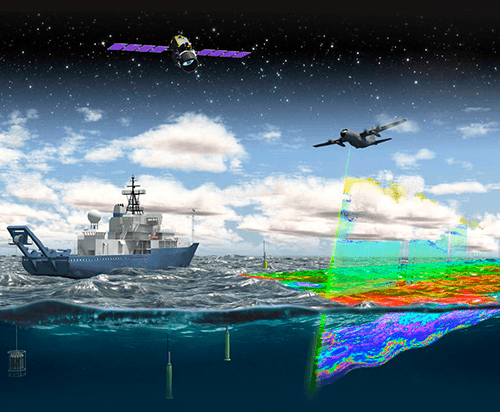
Space Systems – Lidar
Light detection and ranging (LiDAR) systems provide the “eyes” for autonomous navigation, rendezvous, and docking missions, as well as for robotics operating in space.
LiDAR performance is fundamentally driven by laser pulse characteristics: the shorter and faster the pulse, the higher the resolution of the generated image.
GaN devices enable the ultra-fast switching speeds required to generate high-current pulses with extremely short pulse widths, improving resolution, increasing efficiency, and reducing overall system size. This makes GaN a key enabler for next-generation high-performance LiDAR systems in space.
Why GaN?
- Increased resolution
Ultra-short pulse widths (ns and sub-ns range) enable finer distance measurement and higher image fidelity - Increased range
High peak current capability allows stronger optical signals, extending detection distance - Increased frame speed
Faster switching enables higher pulse repetition rates, improving real-time sensing and tracking - Smaller size / lower weight
High efficiency and integration reduce passive components and thermal management requirements
Have a question about Lidar in Space?