by Diego de Azcuénaga

An analysis of structural immunity to Total Ionizing Dose (TID) and control loop stability in high-reliability linear regulation architectures.

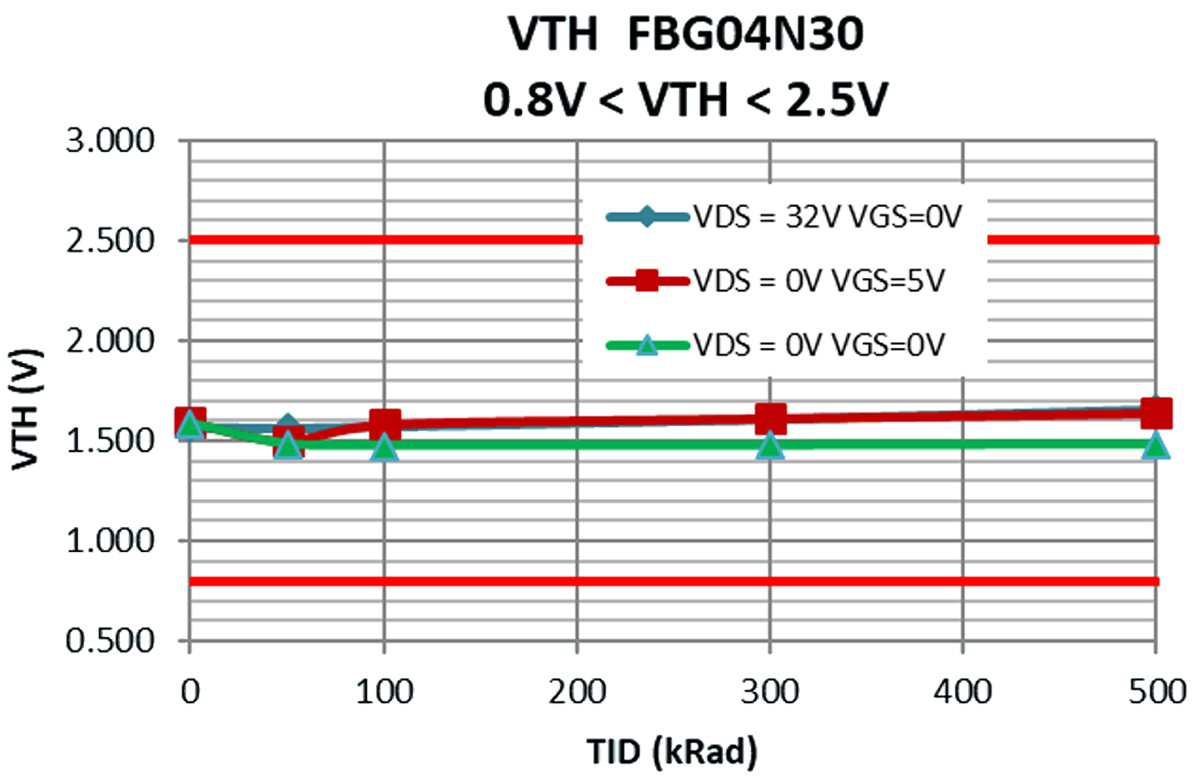
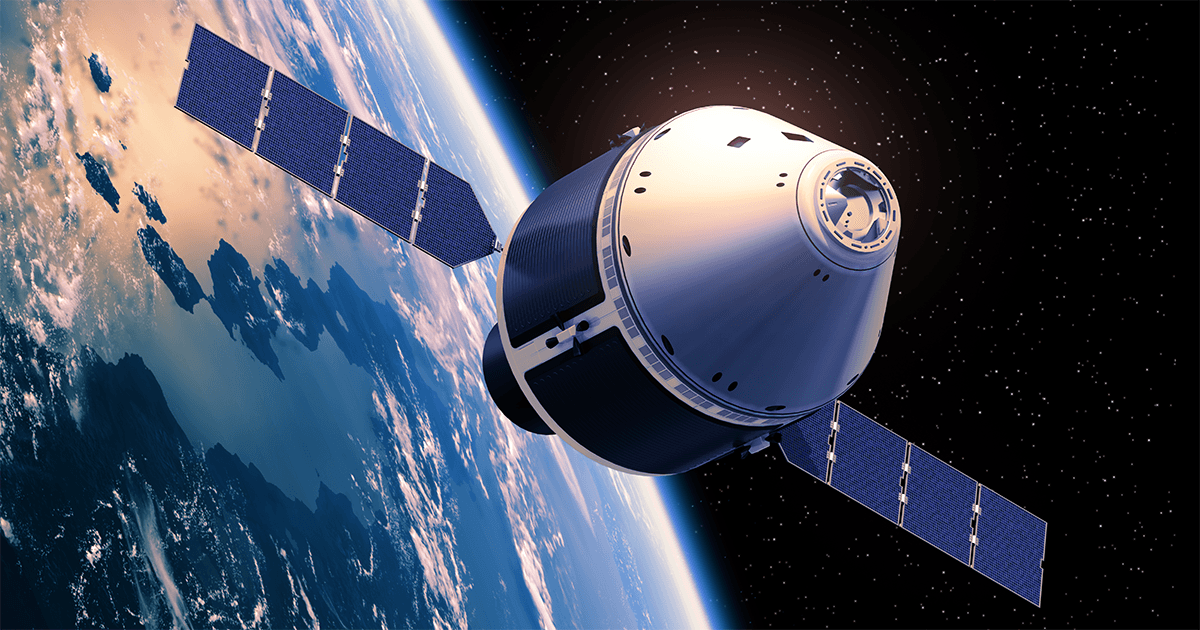
Traditional space LDOs rely on silicon MOSFETs that suffer from radiation degradation. To solve this, Tony Marini from EPC Space highlights a revolutionary alternative using enhancement-mode Gallium Nitride (eGaN) HEMTs. Their unique material physics inherently resists Total Ionizing Dose (TID) effects without performance loss, ensuring exceptional parameter stability in harsh orbital environments.

Read more

In this article, we analyze how monolithic GaN solutions and driver optimization maximize efficiency and power density in high-reliability space systems.

The aerospace industry is undergoing a technological transformation driven by the demand for more compact and efficient power systems. In this context, GaN has established itself as the natural successor to silicon, offering radiation hardness and superior switching capabilities at multi-megahertz frequencies.

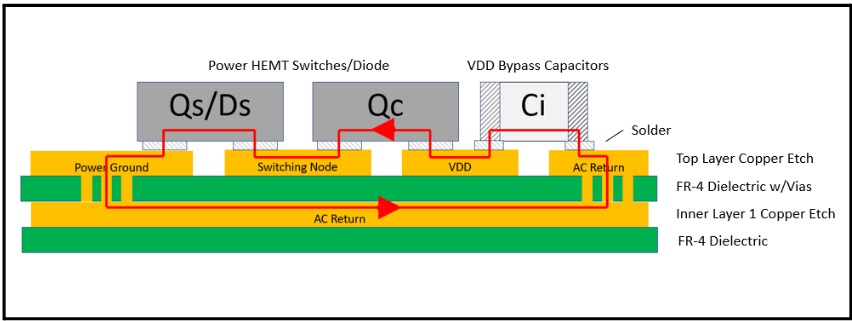
This article analyzes how integrating isolated drivers and GaN HEMTs into half-bridge power stages maximizes energy density, overcoming traditional weight and volume limitations in high-reliability buck converters.

Read the full article at the link below

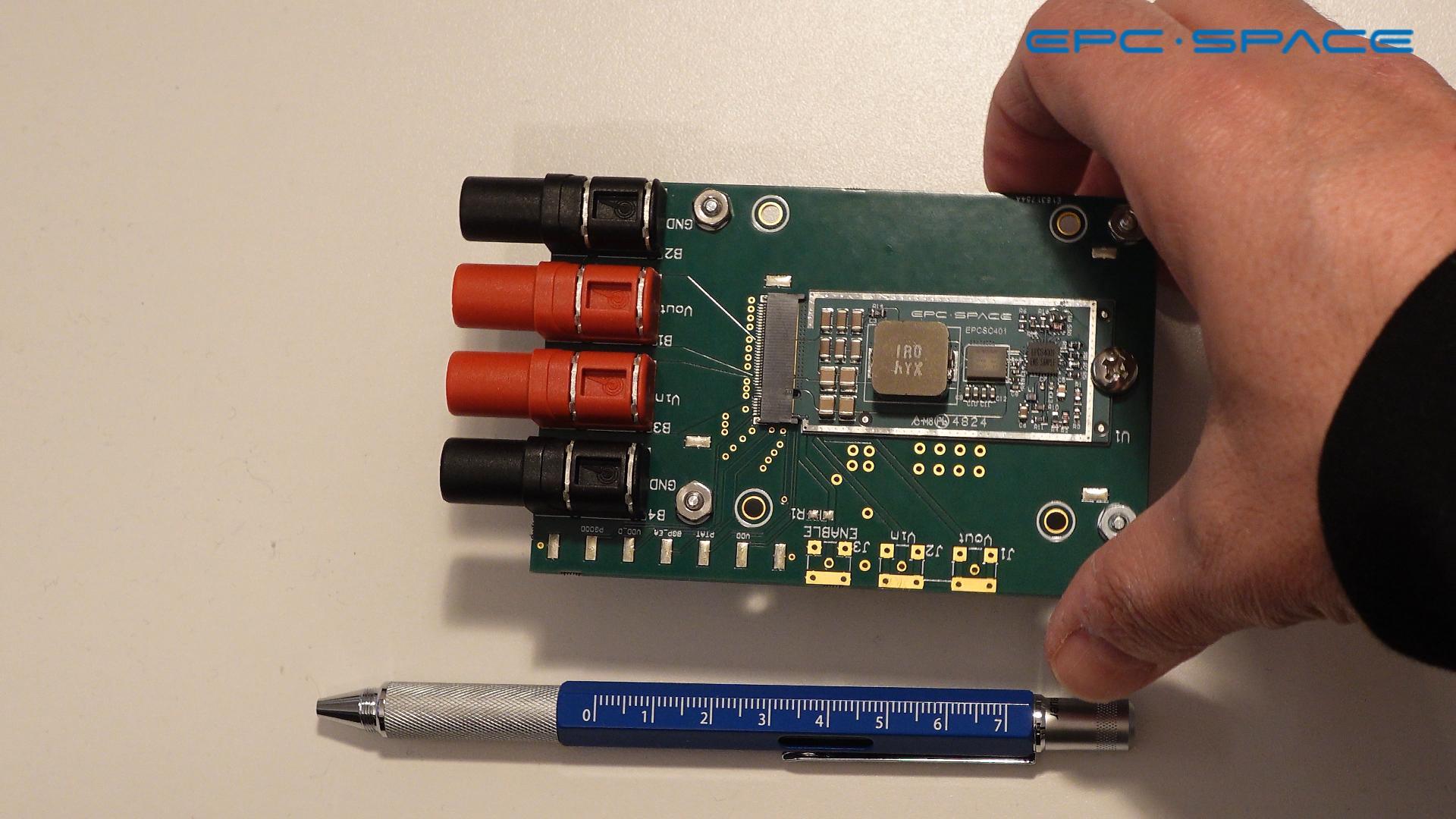
This is the EPCSC401, a GaN-based radiation-tolerant DC-DC converter from EPC Space. Designed for satellites, it converts a 20–50 V bus to a regulated 12 V output with up to 5 A, combining high efficiency with compact power density.

Reference:
EPCSC401 Dev. Board
EPCS4001
EPC7011L7

This video explores the EPC Space EPCSC401, a radiation-tolerant GaN-based DC-DC buck converter designed for spacecraft electronics. It demonstrates how the module converts a 20–50 V spacecraft bus into a regulated 12 V output up to 5 A. The presentation explains the characterization board, GaN power stage, CERN-derived controller, thermal design, and performance measurements, highlighting efficiency, stability, and suitability for high-density space power systems.

Reference:
EPCSC401 Dev. Board
EPCS4001
EPC7011L7

by Diego de Azcuénaga and Tony Marini, EPC Space, Andover, Mass.

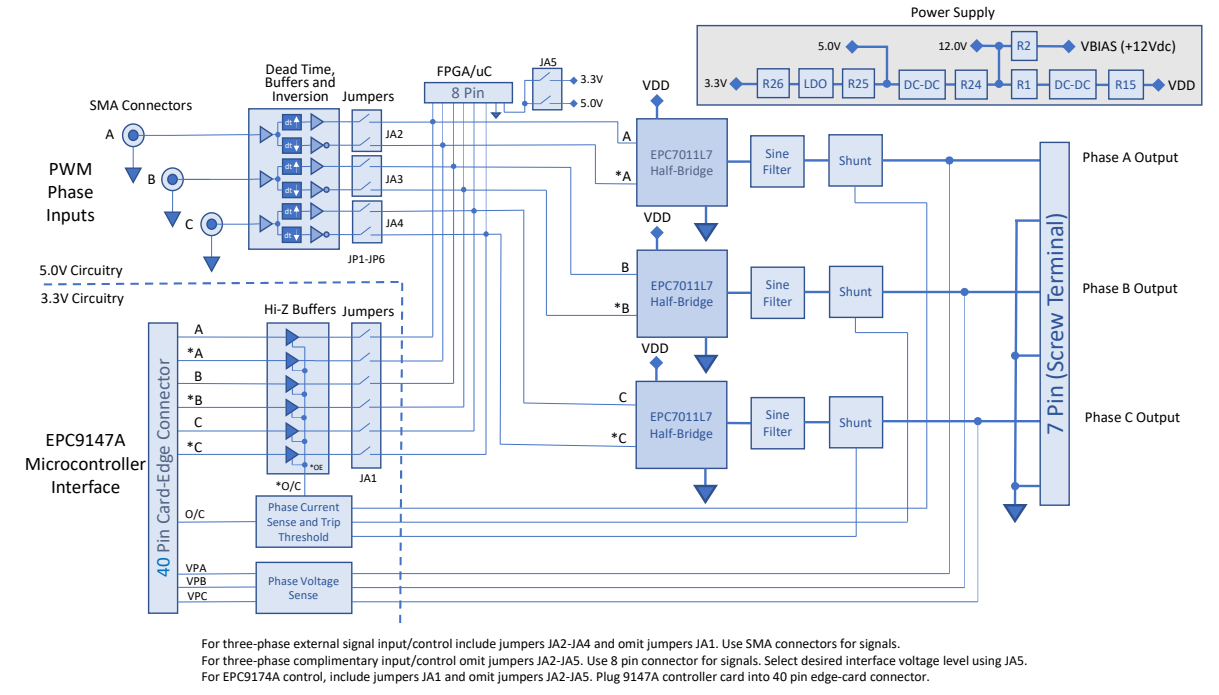
Gallium nitride (GaN) technology is rapidly transforming three-phase motor drive systems, especially in applications that demand high efficiency, fast switching, and robust performance in harsh environments such as space. By integrating radiation-hardened GaN ICs into compact, flexible platforms, engineers can accelerate the development and validation of advanced motor control solutions while meeting stringent reliability and size, weight, and power (SWaP) requirements. In this context, the EPC7C021 demo board provides a three-phase motor drive platform based on the radiation-hardened (rad-hard) EPC7011L7C eGaN half-bridge IC, enabling efficient evaluation and prototyping for space-grade motor drive applications. In this article we describe the features, specifications and operating requirements of the EPC7C021, and explain various aspects of how to configure it for different uses. Read the full article at the link below

How to power logo

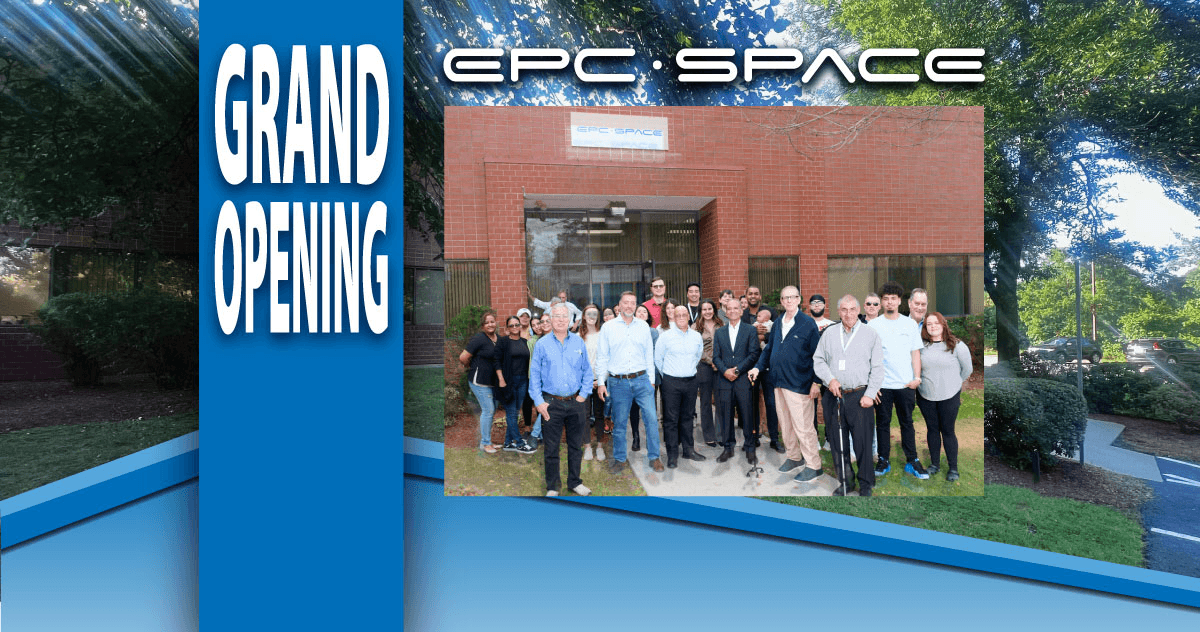
EPC Space’s Grand Opening on October 26, 2023, brought together customers, suppliers, government officials, and space enthusiasts to witness the ribbon-cutting ceremony of a new facility in Andover, Massachusetts for world’s first dedicated facility for Radiation Hardened Gallium Nitride for Space applications.

During the opening ceremony, CEO of EPC Space, Bel Lazar, emphasized the importance of collaboration and innovation in pushing the boundaries of space exploration while thanking the many collaborators in attendance. Bel’s vision for the future of the company highlighted the possibilities that GaN presents to significantly outperform silicon-based devices and enable higher power densities, higher efficiencies, and more compact and lightweight circuitry for critical spaceborne missions.

Attending the ceremony to present EPC Space with the citations were Janice Phillips from Senator Barry Finegold’s office, and Tobin Abraham on behalf of representative Tram Nguyen.

The event also featured product showcases and a tour of the facility highlighting the latest radiation hardened power management solutions for critical spaceborne and other high reliability environments. These applications included the development of higher power density power supplies for satellites and space mission equipment, motor drives for robotics, instrumentation, and reaction wheels, lidar for autonomous navigation and docking, and deep space probes.

EPC Space’s Andover facility Grand Opening not only celebrated a milestone in the company’s history but also laid the foundation for the continued adoption of GaN in space.

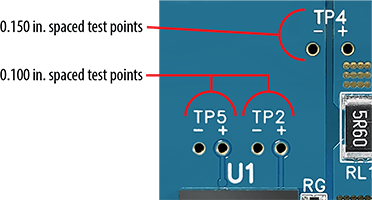
Customers who are presently putting EPC Space product demonstration boards through their paces have noticed that all the key signal measurement test points are implemented as a pair of 0.040” plated-through holes (PTH’s). In each case, each PTH pair has the signal (as represented by TP +) and the associated ground return (as represented by TP -). These test points have either 0.100” or 0.150” hole-to-hole spacing, depending upon the magnitude of the signal being measured (See Figure 1).

Figure 1. PTH Probe Test Point Examples
Read more
Why GaN for DC-DC Space Designs

Power electronics engineers are constantly working towards designs with higher efficiency and higher power density while maintaining high reliability and minimizing cost. Advances in design techniques and improved component technologies enable engineers to consistently achieve these goals. Power semiconductors are at the heart of these designs and their improvements are vital to better performance. In this EPC space blog, we will demonstrate how GaN power semiconductors allow for innovation in the harsh radiation environments of space applications.

GaN power semiconductors offer designers in the high reliability market a sudden and significant improvement in electrical performance over their silicon power MOSFET predecessors. Table 1 compares radiation hardened GaN and Si power semiconductor device characteristics important for circuit designers to increase efficiency and power density in their converter.

Read more
GaN versatility in space

We do not like to boast here at EPC Space, but we do think our discrete and modular product
offerings are both the widest and the most versatile available in the RadHard space/power arena. A good brag is just empty words without the proof to stand behind them. So, in order to offer up some proof of the versatility of our lineup, we have put together an application note as a demonstration. Application Note AN002 shows how an actively-clamped forward converter (ACFC) can be designed and configured using four products from the EPC Space discrete and modular product offering. The resulting circuit demonstrates how a high-performance, low parts count and small physical size solution can be achieved.

The EPC Space products, because of their application-friendly configurations, packaging and high level of integration allow designers to think beyond the component level; to use these devices as true building blocks to create higher-level systems for applications in space. Now that is true versatility!

Please download a copy of AN002  and see for yourself. Even if you do not have an immediate application for the ACFC solution, hopefully this design approach will open your eyes to the many possibilities that these Rad Hard GaN products can offer to you in other converter topologies and circuits.

Source Sense Pin

A quick look at any discrete eGaN® high electron mobility transistor (HEMT) shows that each package contains a SS (Source Sense) pin. This post is an explanation as to why that vitally important pin is necessary and provided to help extract the maximum switching and efficiency performance from the EPC Space HEMTs. As an example, the position of the SS pin on the FSMD-B and CDA1 packages is shown in Figure 1.

Read more